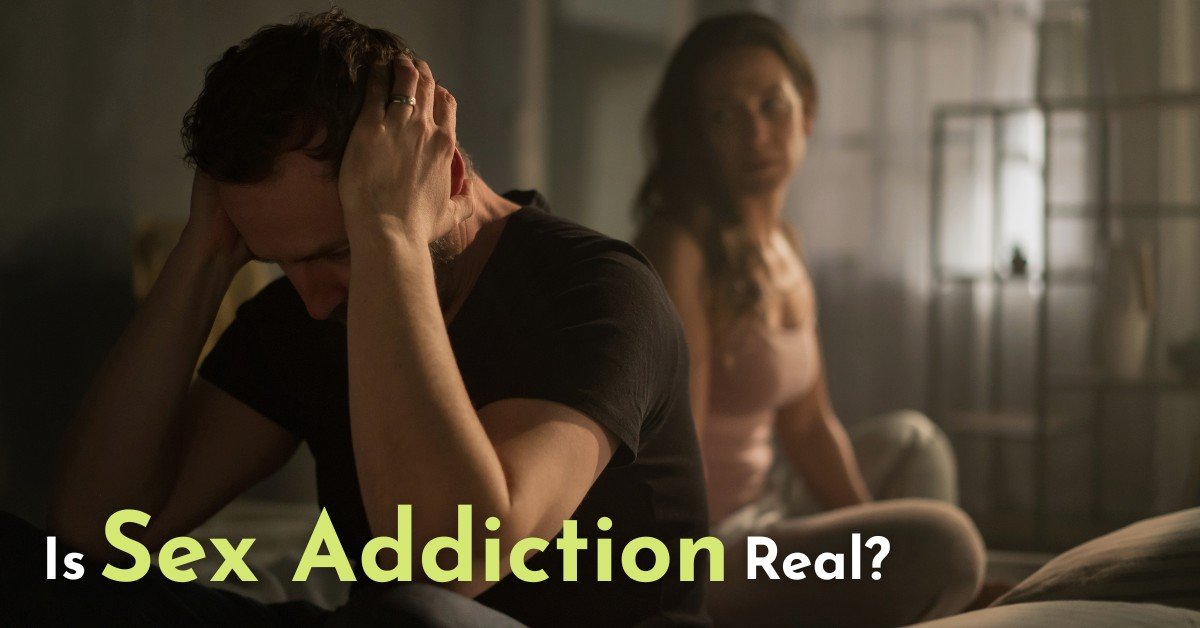
This is one of the most common questions I hear — not just from clients, but from professionals in the mental health world too: “Is sex addiction actually real?”
It’s a question rooted in confusion, stigma, evolving clinical language, and — for many — deep personal pain. So let me answer it clearly:
Yes, sex addiction is real.
AND as with many things related to human behavior and trauma, the answer is also layered.
To fully understand it, we need to talk about how our language around this topic has changed over time, why that matters, and how we can respond to these behaviors with empathy and accuracy — not shame.
Yes, It’s Real — And Our Language Is Evolving

For years, the term sex addiction was used to describe what many people experience: an overwhelming and often destructive pattern of compulsive sexual behavior that feels out of control and continues despite serious personal consequences.
For many, this language helped bring clarity and validation to something that previously felt unnameable.
However, as our understanding of human behavior has deepened, professionals have started to shift the language we use — not because the condition itself isn’t real, but because how we talk about it deeply affects how we treat it, how we see those who struggle with it, and how those individuals see themselves.
In 2018, the World Health Organization officially included Compulsive Sexual Behavior Disorder (CSBD) in the International Classification of Diseases, 11th Revision (ICD-11). This was a landmark moment.
While the term sex addiction has not been adopted in most diagnostic manuals due to its cultural and moral overtones, CSBD provides a clinical, research-supported framework for what many have known and experienced for decades:
For some individuals, sexual behavior becomes repetitive, compulsive, and unmanageable, causing significant harm to themselves and others.
CSBD is currently classified as an impulse control disorder, and it acknowledges that some individuals experience persistent patterns of sexual behavior that they are unable to regulate, even with repeated efforts to stop.
These behaviors often lead to distress, relational breakdown, loss of trust, emotional instability, and other serious consequences — but the behavior continues.
Why We’re Moving Away from the Term “Sex Addict”

The term sex addiction still resonates with many people, and it’s not inherently wrong or harmful — but it’s important to recognize how labeling can shape someone’s identity and healing journey.
When a person begins to see themselves as “an addict” — rather than as a whole person who is struggling with compulsive behavior — that identity can become internalized and self-fulfilling.
They may start believing that they are fundamentally broken, inherently destructive, or incapable of change. And while we do need to take these behaviors seriously, we also need to remember: shame is not a healing tool.
That’s why you’ll increasingly hear clinicians (especially those informed by trauma science and attachment work) use terms like:
- Compulsive Sexual Behavior
- Problematic Sexual Behavior
- Individual Seeking Recovery (ISR)
These terms honor the seriousness of the issue while allowing space for growth, dignity, and individual nuance.
They help clients understand that they are not bad people — they are people in pain, whose behaviors are misaligned with their values, and who need care and guidance to heal.
How Do You Know If It’s Compulsive or Problematic Sexual Behavior?
There’s no one-size-fits-all test, but here are 10 signs that may indicate a person is struggling with compulsive or addictive sexual behavior:
- Persistent, repetitive sexual urges, fantasies, or behaviors that feel difficult (or impossible) to control
- Repeated failed attempts to reduce or stop the behavior
- Escalation — needing more intense, risky, or frequent behaviors to achieve the same emotional effect
- A significant amount of time spent planning, engaging in, or recovering from sexual behavior
- Neglecting important areas of life — such as relationships, work, or health — due to sexual activity
- Continuing the behavior despite serious consequences, such as broken trust, loss of intimacy, or emotional pain in others
- Using sex to numb, escape, or cope with stress, shame, fear, loneliness, or trauma
- Losing interest in other meaningful activities due to preoccupation with sex
- Feeling shame, guilt, or depression after acting out
- Living a double life, often marked by secrecy, compartmentalization, or deception
Not everyone who struggles with sexual behavior will check every box nor does every box need to be checked for it do be addictive or compulsive.
But if these patterns are showing up in someone’s life, especially over time, it’s likely not just about sex — and it’s worth exploring with a trained, compassionate professional.
No Two Stories Are the Same

This is where it’s so important to emphasize individual nuance.
The outward behavior — compulsive pornography use, infidelity, risky sexual encounters, chronic fantasy — may look similar across individuals. But the why, the how, and the what’s underneath are deeply personal.
For one person, these behaviors may be rooted in early attachment trauma or childhood neglect. For another, it may stem from shame around sexuality. Some have histories of religious or cultural repression. Others use sexual behavior to cope with anxiety, rejection, or past abuse.
And let’s not forget: the value system each person holds plays a massive role.
Someone who acts out sexually in a way that violates their own core values will experience a very different kind of shame, dissonance, and urgency to change — compared to someone whose values were never fully explored or defined in the first place.
That’s why we believe in individualized treatment. We want to understand the full picture:
- What led this person to where they are?
- What pain are they medicating or avoiding?
- What parts of themselves have been silenced, rejected, or buried?
- What are the values they have crossed and why?
- What deeper healthy needs have been suppressed through sexual acting out?
- And what do they truly want moving forward?
Healing for the ISR and the PIH

At Choose Recovery, we use the terms:
- ISR – Individual Seeking Recovery
- PIH – Partner in Healing
These terms were chosen with great intentionality to reflect the dignity, autonomy, and humanity of both people involved.
The ISR is not “the problem” — they are a person in pain seeking help. They are learning how to become safe for themselves and others, often for the first time in their lives.
The PIH is not “co-addicted” or “enabling” — they are a person who has been deeply wounded by relational betrayal, often navigating trauma responses like hypervigilance, grief, and loss of self-trust. They are trying to make sense of what’s real, what’s safe, and whether healing is possible.
We support the frameworks of IITAP, APSATS, and AASECT, all of which promote trauma-informed, ethically sound, healthy sexuality, and nuanced care — not just for individuals, but for relationships, families, and communities.
So, Is Sex Addiction Real? Yes. And Here’s What Else Is True.
Yes — compulsive sexual behavior is real.
Yes — it causes real harm.
Yes — it requires thoughtful, compassionate intervention.
But what’s also true is this: Healing is possible.
And it doesn’t begin with shame, labels, or fear.
It begins with curiosity, courage, and a safe space to explore the pain underneath the behavior — and the pain of those who’ve been affected by it.
At Choose Recovery, we’re here for that healing. For the ISR. For the PIH. For the truth. For the work. For the reclamation of identity, connection, and safety.