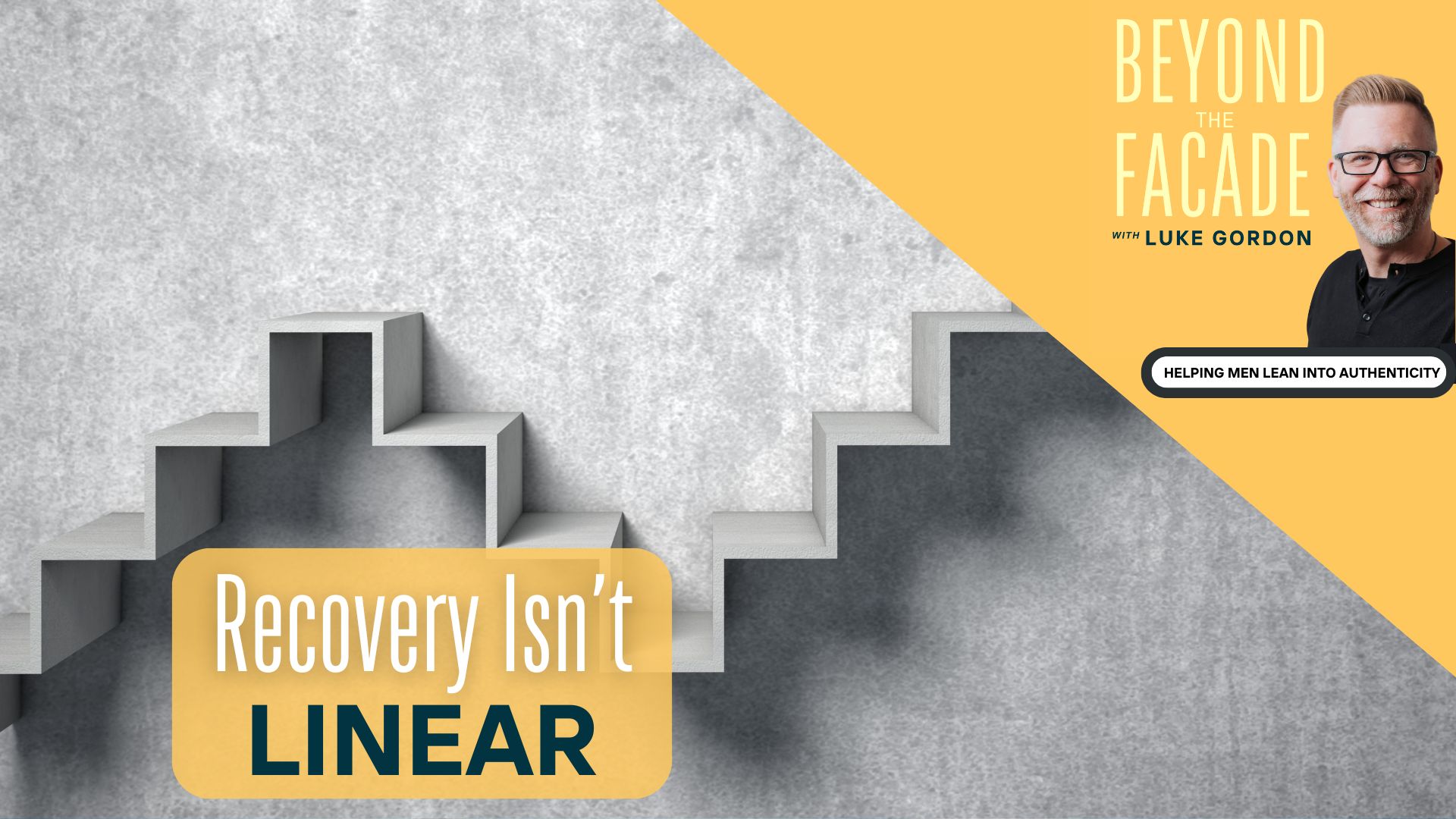
Healing after betrayal is rarely a straight line.
When compulsive behaviors, secrecy, dishonesty, or infidelity have injured a relationship, there is often a tremendous amount of individual work that needs to happen.
The person who engaged in the harmful behavior may need to address shame, trauma, emotional regulation, attachment patterns, compulsive sexual behavior, honesty, and the underlying reasons they learned to hide or avoid difficult emotions.
At the same time, the betrayed partner may be working through betrayal trauma, learning to understand their own nervous system, establishing boundaries, and determining what they need in order to feel emotionally safe.
Individual healing is essential, but there is an important distinction between healing individually and healing the relationship. One does not automatically accomplish the other.
In fact, individual recovery can sometimes become a form of avoidance when it allows someone to stay focused on their own progress while avoiding the difficult relational work required to repair the damage they have caused.
True relationship recovery requires two tracks of healing: individual recovery and relational repair. These tracks are connected, and both need attention if a couple hopes to rebuild trust and create a healthier relationship.
Watch the Episode Here
When Individual Healing Becomes a Way to Avoid Relational Repair
Individual therapy, support groups, recovery programs, and personal growth can be powerful tools. They can help someone understand their history, recognize unhealthy patterns, develop emotional regulation skills, address shame and trauma, and make meaningful changes in their behavior.
The problem occurs when these activities become a substitute for relational responsibility.
Someone may sincerely be doing significant individual work while still avoiding their partner’s pain. They may attend therapy every week, participate in a recovery group, study attachment, practice emotional regulation, and work on childhood wounds.
All of those things can be valuable. But if they remain unwilling to listen to their partner’s experience, answer appropriate questions, acknowledge the impact of their choices, offer empathy, initiate repair, or change how they show up in the relationship, the relationship itself may continue to deteriorate.
This can be particularly complicated after betrayal because the person who caused the injury may feel overwhelmed by their partner’s pain. Hearing the consequences of their choices can activate intense shame, defensiveness, helplessness, or a desire to escape. Retreating into individual work can feel safer than remaining present with someone who is hurting because of what they did.
But healing cannot stop at personal insight.
A person can become more emotionally regulated in therapy and still become defensive when their partner is triggered.
They can understand their attachment style and still avoid difficult conversations. They can learn about compulsive sexual behavior and still fail to become honest and accountable in the relationship.
The goal of individual recovery is not simply to feel better individually. It is also to become more capable of showing up differently in relationships.
When Couples Work Becomes Another Form of Avoidance
Avoidance can also move in the opposite direction.
Instead of focusing exclusively on individual healing, someone may focus entirely on the relationship in order to avoid looking honestly at themselves. They may say, “We need to communicate better,” rather than acknowledging, “I need to become more honest.”
They may focus on their partner’s emotional reactions instead of examining why their partner is reacting that way. They may describe the couple’s “cycle” without taking responsibility for the specific choices they make within that cycle.
Statements such as “We both contributed to the problem” can also become a way of avoiding accountability when they are used to minimize the specific harm caused by deception, secrecy, or compulsive behavior.
Couples work is important, but it should not replace individual responsibility.
A healthier approach recognizes that both questions need to be asked: What do I need to change within myself, and what do I need to change in the way I participate in this relationship?
These are not competing questions. They are connected.
The Two Tracks of Recovery
Individual healing and relational healing require different areas of focus, but they continually influence each other.
The Individual Track
Individual recovery involves developing a deeper understanding of your own patterns and learning how to respond differently. This process can include:
- Understanding personal behavioral and relational patterns
- Developing emotional regulation skills
- Addressing shame and trauma
- Examining attachment patterns
- Building honesty and integrity
- Changing harmful or compulsive behaviors
- Increasing the ability to remain present during discomfort
- Learning to recognize personal choices and areas of responsibility
One useful exercise is to examine a difficult interaction step by step. Write down what happened, what the other person said or did, how you responded, what happened next, and how the interaction ended. Then look for patterns.
The circumstances may change from one conflict to another, but the pattern may remain remarkably consistent.
Once the pattern becomes visible, you can begin identifying where you had power and choice. This moves the focus away from simply explaining why you behaved a certain way and toward understanding what you can do differently.
For someone recovering from compulsive sexual behavior, this kind of awareness can be particularly important. Compulsive behavior is often connected to avoidance of difficult emotions, discomfort, or relational distress.
Learning to recognize the emotions that precede the behavior creates opportunities to respond differently instead of automatically escaping through an unhealthy coping strategy.
Individual healing also involves learning to remain present. For the person who caused the betrayal, that may mean learning to stay emotionally available when their partner is angry, hurt, afraid, or triggered.
For the betrayed partner, it may involve learning to stay connected to their own body, recognize what their nervous system is communicating, and honor their own emotional and physical needs.
The Relational Track
Relational repair involves rebuilding the relationship through observable behaviors, not simply intentions.
For the person who caused the betrayal, this may include learning to own the impact of their choices, listen without becoming defensive, offer empathy, answer appropriate questions, make meaningful amends, and take an active role in rebuilding safety.
An apology can be an important beginning, but an apology by itself does not repair betrayal trauma. Repair requires consistent behavior over time.
One of the most important elements of relationship recovery is predictability. Betrayal can disrupt a person’s sense of stability and security. When information has been hidden or reality has been distorted, the betrayed partner may no longer know what to expect.
Predictable behavior can gradually begin restoring that sense of stability. This might involve greater transparency, consistency in daily routines, reliable follow-through, openness about appropriate information, and doing what you say you are going to do.
Rebuilding trust after infidelity or compulsive sexual behavior is not about making one grand gesture that convinces a partner everything is different. It is about repeatedly demonstrating through behavior that something really has changed.
Creating a Healthy Space for Difficult Conversations
Couples recovering from betrayal often need to have difficult conversations, but talking about the betrayal constantly can overwhelm both people’s nervous systems. A healthier approach is to create structure around difficult conversations.
Rather than allowing every interaction to become a conversation about the betrayal, a couple might establish a designated time to discuss recovery-related concerns.
The exact structure will depend on the couple and the stage of recovery, but the goal is to create a space with a clear purpose, defined boundaries, and enough structure to prevent conversations from becoming endless cycles of conflict.
A healthy conversation space should allow the betrayed partner to express pain and ask appropriate questions while giving the person who caused the injury an opportunity to practice staying present, listening, and responding without becoming defensive.
It is also important to establish what happens when either person’s nervous system becomes overwhelmed. Taking a pause can be healthy. Disappearing is not the same thing as taking a pause.
If someone needs time to regulate, there should be a clear understanding of when and how the conversation will resume. Saying, “I am too overwhelmed to continue this conversation right now, but I will come back at 7:00 tonight,” is very different from walking away indefinitely.
Returning when you said you would is itself a form of rebuilding trust.

How to Know Whether Recovery Is Actually Working
Recovery does not produce instant results. When a relationship has experienced repeated secrecy, dishonesty, or betrayal over months or years, it is unrealistic to expect one positive interaction to erase the injury.
Instead of looking for immediate results, look for patterns of change over time.
Signs of meaningful progress may include:
- You are increasingly able to stay present during uncomfortable conversations.
- You can request a pause without using it to escape accountability.
- You return when you say you will.
- You can recognize both your intentions and the impact of your behavior.
- You can hear your partner’s pain without making yourself the victim.
- You can accept responsibility without collapsing into shame.
- You initiate difficult conversations instead of requiring your partner to pursue you.
- You initiate repair after causing harm.
- Your behavior is becoming more consistent and predictable.
- Your partner is seeing increasing empathy, accountability, and engagement.
- Your individual work is resulting in observable behavioral change rather than simply better explanations.
This distinction between words and behavior is critical. Someone can become very skilled at explaining why they behave the way they do without actually changing the behavior.
Recovery requires both insight and action.
Questions to Ask Yourself During Recovery
Honest self-reflection can help identify whether individual healing and relational healing are moving together.
If you are the person who caused the betrayal, consider asking yourself:
Am I asking for space to regulate, or am I using space to escape accountability?
How is my individual recovery work helping me become more relationally available?
Am I initiating repair, or am I waiting for my partner to pursue me?
Can I hear my partner’s experience without immediately explaining my own?
What specific changes would my partner realistically expect to see from me, and am I consistently demonstrating those changes?
For the betrayed partner, important questions may include:
Is this relationship creating greater stability or prolonged uncertainty?
Does my partner return when they say they will?
Are they initiating repair?
Am I seeing increasing empathy, accountability, and engagement?
Is their individual work changing their behavior, or are they primarily explaining their behavior?
What do I need in order to remain emotionally safe?
These questions are not about demanding perfection. Recovery is not a perfection-based process. They are about identifying whether there is meaningful movement in the direction of greater honesty, safety, accountability, consistency, and connection.
Personal Growth Does Not Guarantee Reconciliation
One of the most difficult realities of betrayal recovery is that personal growth does not guarantee that a relationship will survive.
A person can genuinely change. They can become more honest, emotionally regulated, accountable, empathetic, and trustworthy. They can address compulsive behaviors and take responsibility for the harm they caused. They can do everything within their control to become healthier.
Even then, reconciliation is not guaranteed.
Individual growth creates greater opportunity for relationship healing, but the relationship itself still needs to heal. Both partners have their own experiences, choices, boundaries, and needs.
This is why the goal of recovery cannot simply be, “If I do enough work, my partner will forgive me.” A healthier goal is to become a person who lives with honesty and integrity because those qualities are consistent with who they want to be, regardless of whether they receive the immediate response they hope for.
Over time, consistent behavior can provide new evidence. The relationship may begin to experience greater safety and stability. Trust may gradually grow. But the process takes time.
Healing Requires Both Individual and Relational Work
Avoidance can take many forms. Sometimes it looks like refusing to do individual work and blaming the relationship for everything. Other times, it looks like becoming so focused on personal healing that the relationship and the betrayed partner’s pain are left behind.
Neither approach is enough.
Betrayal trauma recovery and relationship recovery require both individual healing and relational repair. The person who caused the injury needs to address the internal patterns that contributed to their behavior while simultaneously learning how to show up differently in the relationship. The betrayed partner needs opportunities to process their own trauma, establish boundaries, understand their needs, and determine what emotional safety looks like for them.
The goal is not to choose between individual work and relationship work. The goal is to allow each to strengthen the other.
When individual healing leads to greater honesty, emotional regulation, empathy, accountability, and relational availability, it begins contributing to relationship repair. When relational repair provides opportunities to practice those skills in real interactions, individual growth becomes more meaningful and visible.
Healing happens through that intersection.
How Choose Recovery Services Can Help
Recovering from betrayal, compulsive sexual behavior, infidelity, and relationship trauma can feel overwhelming, especially when you are trying to determine what needs to happen first. Choose Recovery Services provides support for individuals and couples navigating the complicated process of recovery, including the individual and relational aspects of healing.
Support can help you better understand the patterns contributing to your struggles, develop healthier emotional and relational skills, work through betrayal trauma, increase accountability and honesty, and learn how to rebuild safety and trust through consistent action.
For the person who caused the betrayal, recovery is about much more than stopping a behavior. It involves developing the capacity to live with greater honesty, integrity, emotional presence, empathy, and accountability. For the betrayed partner, healing involves creating greater emotional safety, understanding the impact of betrayal trauma, establishing healthy boundaries, and reconnecting with a sense of stability and agency.
If you are struggling to know how to move forward, you do not have to navigate the process alone. The right support can help you identify where avoidance is showing up, understand what needs to change, and create a recovery path that addresses both individual healing and relational repair.
True recovery is not simply about becoming healthier on your own. It is about learning how to bring that growth into the way you live, communicate, take responsibility, and relate to the people you love.t—and just as importantly, you deserve to experience those qualities within your relationship with yourself.