Take a moment right now to pause and breathe. Place your hand over your chest and notice your breath. How many of you feel like you’ve been holding your breath?
In our fast-paced world, we often forget to slow down and check in with ourselves, especially when we’re carrying the emotional weight of others.
If you’re someone who feels like your empathy has become a burden—that it’s been used against you, taken advantage of, or has left you feeling drained and resentful—this message is for you.
What if your empathy isn’t the problem? What if it’s just been unprotected?
Watch the Episode Here
When Empathy Feels Like a Betrayal
Many deeply empathetic people reach a point where they feel betrayed by their own caring nature. You might find yourself thinking, “Maybe I shouldn’t have any empathy anymore,” especially when you’re not receiving empathy in return, or when you’re in a relationship with someone who seems to have zero empathy while you’re holding the emotional space for everyone.
This frustration makes complete sense. When empathy has been gaslit, blamed, or made invisible, it stops feeling like the gift it truly is. But here’s the truth: your empathy didn’t betray you. It’s been used against you, taken advantage of, and left unprotected—but the empathy itself isn’t the problem.
Think of it this way: if you had a beautiful garden but no fence around it, and people kept trampling through it, taking what they wanted, and leaving destruction behind, you wouldn’t blame the garden. You’d build a fence. Your empathy is that garden—beautiful, valuable, and deserving of protection.
Understanding the Two Types of Empathy
To better understand how to protect your empathy, it’s helpful to recognize that there are two distinct types: cognitive empathy and affective empathy.
Cognitive empathy is perspective-taking or mentalizing. It’s the ability to recognize and understand another person’s emotions without necessarily feeling them yourself. When someone tells you they’re feeling lonely, cognitive empathy allows you to reach back into your own experience of loneliness to understand where they’re coming from, without having to feel lonely in that moment.
Affective empathy, often called experience sharing, is your own emotional attunement with another person’s experience. This is the “me too” feeling—when you not only understand what someone is feeling but actually feel it with them or for them.
Both types of empathy are valuable and necessary for meaningful connection. However, problems arise when affective empathy goes into overdrive, especially for those who grew up in emotional chaos, have anxious attachment styles, or are in emotionally unsafe relationships.
When Empathy Becomes Survival
If you’re someone who over-empathizes, your affective empathy may have become hijacked as a survival tool. Your nervous system learned to become hyper-attuned to your partner’s mood, their tone, their footsteps, even the way they shut a drawer. Your body started tracking them before it even checked in with you.
This isn’t a weakness—it’s your nervous system doing its job to keep you safe. But over time, you began to confuse this survival strategy with love. When you’ve been in a destructive or emotionally unsafe relationship, your empathy likely became your survival strategy. You didn’t just feel your partner’s emotions; you learned how to predict them. You could tell by the way they put their keys on the counter whether you needed to brace yourself or breathe.
That’s not just empathy—that’s hypervigilance wearing empathy’s mask. It looks like compassion, it looks like care, it can even look like love, but really it’s your nervous system running overtime trying to stay safe.
Note: Discover our article on empathy vs. self-pity.
The Signs of Unprotected Empathy
When empathy lacks boundaries, it can become self-abandonment. No matter how much love or care you pour into a relationship, if it’s leaking from you without any protection, it’s going to drain you. Here are some signs that your empathy has become unprotected:
Walking on Eggshells Around Your Truth
Maybe when you need to bring up something difficult, you soften your tone even when you’re the one who’s been wounded. When your partner’s behavior has impacted you and their tone is loud, you make yours softer. You choose your words carefully because you don’t want to trigger them, so you’re walking on eggshells around your own truth just to keep the conversation calm.
Delaying Your Needs
Perhaps you delay bringing up your needs until “the right moment,” which never really comes. So you keep shelving those different things silently, repeatedly, just not bringing them up because it never seems to be the right time.
Giving Endless Benefit of the Doubt
You might give your partner the benefit of the doubt over and over, even when that doubt is crushing your nervous system. You say things like, “Well, they did go to that one meeting,” or “At least they’re not yelling like they did before,” even when your gut is screaming at you.
Becoming the Explainer
You become the explainer of their behavior to other people. You try to fix the consequences of their actions, manage how others perceive them, cushion the truth for families and friends, or even convince yourself that things are better than they really are.
Rushing to Forgive
You rush to forgive not because repair has happened, but because the pain is unbearable. You mistake emotional exhaustion for closure, feel guilty for needing reassurance, and instead of asking for it, you try to soothe yourself by minimizing your needs and pretending you’re fine.
Taking Responsibility for Conversations Gone Wrong
When a conversation goes south because you brought something up, you catch yourself saying, “I should have never brought it up”—not because you brought it up harshly, but because they didn’t like that you brought it up at all, and you turn it on yourself.
Managing Their Healing More Than Your Own
You track their progress, remind them of their therapy appointments and group meetings, hold your breath hoping that maybe this time they’ll have that breakthrough moment, all while neglecting your own healing journey.
The Path to Protected Empathy
Healing doesn’t happen by turning off your empathy, hardening yourself, walling off, or disconnecting. When you’ve been injured repeatedly while continuing to offer empathy to someone who continues to harm you, it makes sense that part of you wants to shut that off completely. But this goes against the grain of who you really are.
The real shift involves learning how to protect your empathy so that it becomes a strength. This starts by anchoring into your own secure self.
Right now, try this: place your hand on your heart and say out loud or repeat in your mind: “My empathy is not a problem. My empathy is a gift, and I need to protect it.”
Let that land. When empathy is rooted in your secure sense of self, when it’s protected by boundaries, when it’s honored and not hijacked, empathy becomes magnetic. It becomes healing. It builds intimacy and creates safety.
Practical Tools for Protecting Your Empathy
Energy Check-Ins
Before stepping into a conversation, especially a challenging one, pause and ask yourself: “What energy am I bringing to this space?” After the interaction, ask: “What energy did I absorb? What energy am I walking away with?”
This helps you identify what is yours and what you may have picked up from someone else. You might realize, “I went into that conversation feeling calm and regulated, but I’m leaving feeling anxious and dysregulated. That anxiety isn’t mine—I absorbed it.”
Some people find it helpful to give their energy a color to make this visualization easier. If you notice that color has shifted after a conversation, you know you’ve absorbed something that doesn’t belong to you.
Create an Energy Shield
Imagine a protective bubble around yourself, like Violet from The Incredibles. This shield lets love and truth in while keeping out what doesn’t belong to you. It prevents you from absorbing what someone else isn’t willing to carry themselves.
Visualize this soft, clear shield or light filter that lets in empathy with choice, and use the mantra: “I take responsibility for my energy and nothing else and no one else’s.”
Recognize the Physical Signs
When you absorb too much emotional energy from others, your body will tell you. Do you feel tightening in your chest? Do you have shallow breath or hold your breath entirely? Is there stiffness in your body? Do your shoulders move toward your ears? Does your chest concave?
When you notice these physical signs, pause and ask yourself: “Is this mine, or did I just absorb it from someone else?” Ground yourself by wiggling your toes, shaking it off, reclaiming what’s yours, and pushing out what isn’t.
The Courage to Protect Your Peace
Protecting your peace doesn’t make you a cold person. It doesn’t make you less authentic or vulnerable. It makes you wise. It helps you stay emotionally regulated, remain in your window of tolerance, and avoid fight, flight, freeze, or fawn responses. It means you’re caring for yourself, and that takes tremendous courage.
There may be fear underneath this new way of showing up—fear of being misunderstood when you protect your energy, fear of being “too much” or “not enough.” When you start practicing protected empathy, it may feel like you’re not the same person, and others might be confused by this change.
But here’s what’s important to understand: the people who truly want to be in your life will seek to understand this difference. They won’t erase you from their life, become defensive, or use your growth against you. The people who cannot, will not, and don’t want to understand and respect your more boundaried approach to energy don’t get the privilege of being in relationship with you.
This isn’t said egotistically—it’s about recognizing that your energy sustains your life, your day, and how you show up in integrity with your values, your work, and your relationships. That matters, and it’s worth protecting.
Breaking Old Patterns
When your nervous system has lived in survival mode, it becomes accustomed to an old blueprint—one of overfunctioning, lacking boundaries, and hypervigilance. To shift this old blueprint into something new requires changing patterns that aren’t comfortable to change.
It’s going to feel weird. It might feel awkward. You might feel like you’re being mean. You might not feel like “yourself” because the version of you that showed up in those old relationship patterns wasn’t healthy—it was an unhealthy attachment that was enmeshed rather than securely connected.
Give yourself grace and space to practice this slowly and safely. Allow yourself to grieve the old versions, the old patterns, the old way of doing things. You are allowed to protect your peace and decide what energy you allow into your space and what you keep out.
You Don’t Have to Carry What Was Never Yours
This is a radical shift: you don’t have to absorb someone else’s energy. They are responsible for carrying their emotions. You are not responsible for carrying their emotions. Giving yourself permission to say, “I’m responsible for my energy, and you are responsible for yours,” calls you back to your personal agency—the power to decide whose energy you let in and whose you don’t.
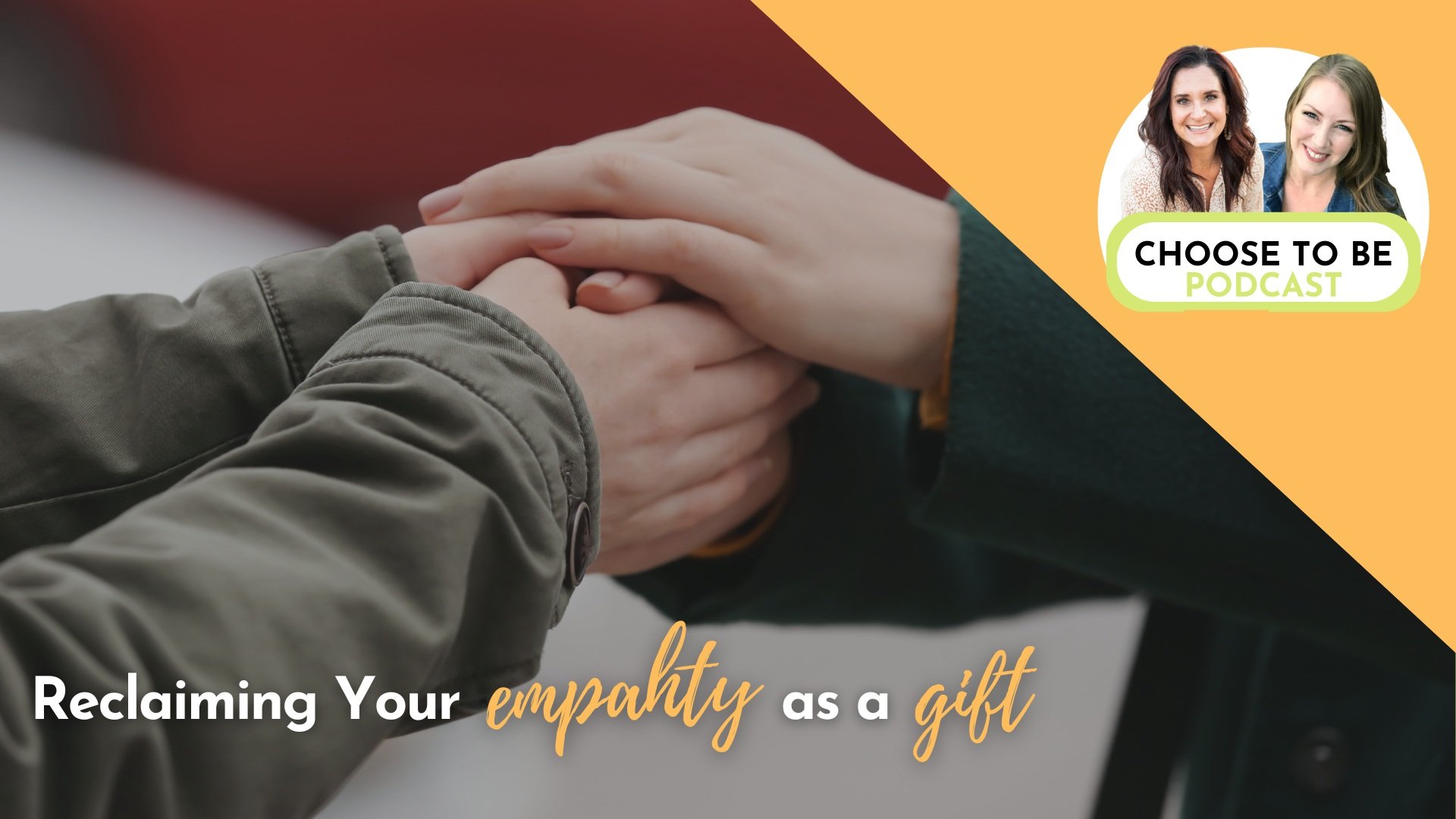
You can be empathetic without being available for chaos. You can be compassionate without compromising your peace. Your ability to hold space for others is indeed a gift, but holding space for yourself is a responsibility.
Empathy in Relationships After Betrayal
If you’re in a relationship where betrayal has occurred, it’s important to understand that your partner’s empathy is not your lifeline or emotional support system. It’s not a shortcut to healing. Empathy is not something anyone is entitled to—it’s something that gets honored by showing up, doing the work, creating safety, listening, and making real repair.
This means not using pain to bypass your partner’s experience, not using growth as a shield from accountability, and not expecting your partner to hold your healing without doing the same for them in return. You don’t get to ask your partner to stay soft if you are not willing to become safe.
Questions for Self-Reflection
As you consider how to better protect your empathy, reflect on these questions:
- Where have I confused empathy with responsibility?
- What parts of me are asking: How can I allow myself to feel deeply without losing myself in someone else’s storm?
- What would healthy empathy look and feel like in my body and in my voice?
- How can my boundaries support that healthy empathy?
Your Empathy Is Sacred
Your empathy was never too much—it was perhaps just unguarded. Now you get to protect it without apology. Just because you notice everything doesn’t mean you’re crazy; it just means you’re constantly decoding a world or relationship that isn’t safe.
Your empathy is sacred, but when it’s not grounded, it can turn into self-neglect that feels like love. You don’t have to stop caring; you just have to stop carrying what was never yours to carry to begin with.
Remember: your tenderness isn’t the problem. Your empathy isn’t something you have to fix—it’s something you have to protect. When you learn to guard your empathetic nature with healthy boundaries, it becomes the superpower it was always meant to be.
How Choose Recovery Services Can Help
At Choose Recovery Services, our team of experienced coaches understands the delicate balance between maintaining your empathetic nature and protecting your emotional well-being. We specialize in helping individuals who have been in relationships affected by addiction, betrayal, and emotional trauma learn how to establish empathy with empowered boundaries.
Our coaches work with clients to:
- Develop healthy boundary-setting skills that protect your empathetic nature without shutting down your caring heart
- Learn to differentiate between cognitive and affective empathy so you can choose when and how to engage emotionally
- Practice energy management techniques that help you recognize when you’re absorbing others’ emotions versus experiencing your own
- Build secure attachment to yourself as the foundation for healthy empathy in relationships
- Navigate the healing process in relationships where trust has been broken while maintaining your emotional safety
- Process trauma responses like hypervigilance that may be masquerading as empathy
- Develop self-compassion practices that honor your tender heart while building resilience
Whether you’re working to heal within your current relationship or learning to protect your empathy as you move forward, our coaches provide a safe, non-judgmental space to explore these complex dynamics. We believe that your empathy is indeed a gift—one that deserves to be honored, protected, and expressed in healthy ways.
Through individual coaching sessions, you’ll learn practical tools and strategies for maintaining your empathetic nature while building the emotional boundaries necessary for your wellbeing. You don’t have to choose between caring for others and caring for yourself. With the right support and tools, you can do both.
Your empathy isn’t too much, and you don’t need to fix it. You just need to learn how to protect it, and we’re here to help you do exactly that..